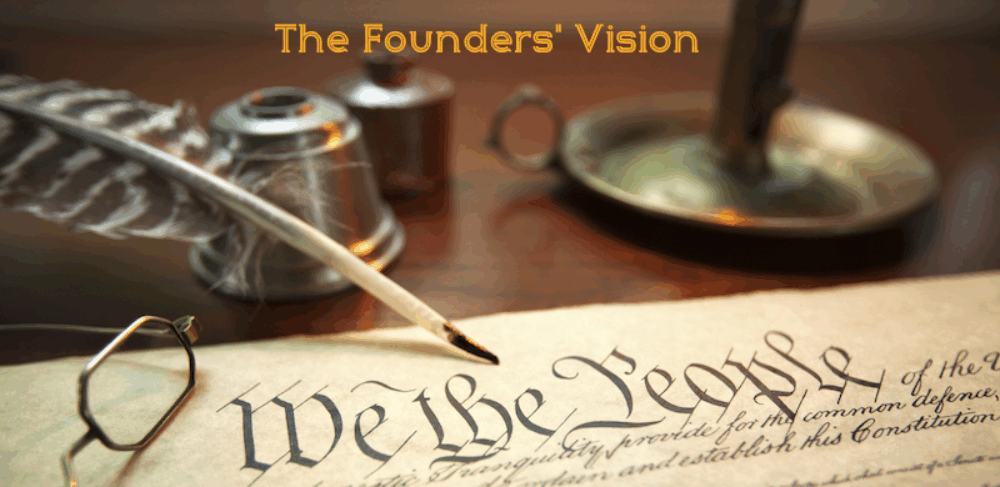
Free speech is often regarded as the cornerstone of American democracy. It represents the idea that individuals have the right to express their beliefs, ideas, and criticisms without undue government interference. The history of free speech in the United States, however, is not a straightforward story of consistent expansion. Instead, it is marked by struggles, contradictions, restrictions, and gradual victories. Understanding the development of free speech requires examining its origins in colonial America, its codification in the First Amendment, and the many legal, political, and cultural battles that have shaped its meaning over more than two centuries
Colonial Roots and Revolutionary Ideals
Before the United States became an independent nation, the American colonies operated under English law, which did not provide robust protections for free expression. In England, the government controlled printing presses through a licensing system, and writers could be prosecuted for seditious libel—publishing criticism of the government, even if it was true.
In colonial America, these restrictions also applied. Printers and pamphleteers were vulnerable to censorship, yet the colonies also became fertile ground for dissenting ideas. The famous 1735 trial of John Peter Zenger, a New York printer accused of libel for criticizing the royal governor, became a landmark moment. Zenger’s lawyer argued that truth should be a defense against libel, and the jury acquitted him. Although this case did not establish binding precedent, it symbolized a growing belief in the value of open criticism of government authority.
During the Revolutionary period, pamphlets, newspapers, and speeches spread ideas of liberty and independence. Figures like Thomas Paine, through works such as Common Sense, helped fuel revolutionary sentiment. The colonists’ experience with British censorship directly influenced their demand for robust protections of speech and press once independence was won.
The First Amendment
In 1791, the Bill of Rights was ratified, and the First Amendment declared:
“Congress shall make no law… abridging the freedom of speech, or of the press.”
This simple yet powerful language provided the foundation for free expression in the United States. However, its meaning was not immediately clear. Many early leaders did not interpret the First Amendment as guaranteeing absolute freedom.
Just a few years later, in 1798, the Federalist-controlled Congress passed the Alien and Sedition Acts. These laws criminalized criticism of the federal government, leading to the prosecution of journalists and political opponents of President John Adams. The acts sparked outrage and contributed to Adams’s defeat in the election of 1800. When Thomas Jefferson became president, he pardoned those convicted under the laws, and the Sedition Act expired. This early clash demonstrated that free speech would be contested territory, often dependent on political circumstances.
Nineteenth-Century Struggles
Throughout the 19th century, free speech debates emerged around issues of slavery, war, and social reform. Abolitionists, who sought to end slavery, often faced violent opposition and censorship in both the South and the North. Southern states passed laws banning abolitionist literature, while mobs attacked anti-slavery speakers. Despite this suppression, abolitionist voices persisted, helping lay the groundwork for broader recognition of free expression as essential to social progress.
During the Civil War, President Abraham Lincoln sometimes restricted civil liberties, including speech, in the name of preserving the Union. Newspapers sympathetic to the Confederacy were shut down, and dissenters were arrested. These actions raised questions about how far the government could limit speech during wartime—a recurring theme in American history.
The late 19th century also saw the rise of labor movements and socialist groups, whose protests and publications were often suppressed by local governments and employers. These struggles foreshadowed the major free speech battles of the 20th century.
The Early Twentieth Century and the Supreme Court
For much of American history, the First Amendment had little practical effect because the Supreme Court rarely enforced it. That began to change in the early 20th century, particularly during World War I. The federal government passed the Espionage Act of 1917 and the Sedition Act of 1918, which made it a crime to interfere with the war effort or criticize the government. Hundreds of people, including socialists and antiwar activists, were prosecuted.
In landmark cases such as Schenck v. United States (1919), the Supreme Court upheld these convictions. Justice Oliver Wendell Holmes, writing for the Court, introduced the “clear and present danger” test, suggesting that speech could be limited if it posed a serious threat, like shouting “fire” in a crowded theater. While these decisions upheld restrictions, Holmes’s reasoning opened the door to a more nuanced understanding of free speech.
Gradually, the Court expanded protections. In Brandenburg v. Ohio (1969), it replaced “clear and present danger” with a stricter standard: speech could only be punished if it incited “imminent lawless action.” This shift significantly strengthened free speech rights, protecting even inflammatory or unpopular speech unless it directly encouraged immediate violence.
Free Speech and Social Movements
Throughout the 20th century, free speech became deeply intertwined with social and political movements. The civil rights movement relied heavily on protest, marches, and outspoken criticism of segregation. Leaders like Martin Luther King Jr. faced arrests and hostility, yet the courts increasingly recognized the importance of protecting protest as a form of expression. In New York Times v. Sullivan (1964), the Court ruled that public officials could not win libel suits unless they proved “actual malice,” thereby protecting robust criticism of government and empowering the press during the civil rights struggle.
The Vietnam War era further tested free speech boundaries. Student protests, antiwar demonstrations, and symbolic acts such as burning draft cards sparked intense debate. In Tinker v. Des Moines (1969), the Supreme Court held that students wearing black armbands to protest the war were engaged in protected symbolic speech, declaring that students do not “shed their constitutional rights at the schoolhouse gate.”
Free speech also became central in debates over obscenity, art, and popular culture. Court cases involving literature, film, and later music often wrestled with whether offensive or explicit material deserved protection. Over time, the Court narrowed the definition of obscenity, ensuring that most expressive works, however controversial, remained protected.
Free Speech in the Digital Age
In recent decades, the rise of the internet and social media has transformed the free speech landscape. Online platforms have allowed unprecedented levels of expression but also raised new challenges. Questions about misinformation, hate speech, harassment, and the role of private companies in moderating content have become central debates.
Unlike the government, private companies are not bound by the First Amendment, which means platforms like Facebook or X (formerly Twitter) can restrict speech according to their policies. This has sparked fierce disagreements about whether such moderation protects users or undermines free expression. Meanwhile, the government continues to grapple with how to regulate online speech without violating constitutional rights.
At the same time, free speech debates have extended to college campuses, workplaces, and public discourse more broadly. Disputes over “cancel culture,” hate speech, and political correctness reveal that while the legal protections of free speech are strong, cultural and social pressures continue to shape its boundaries.
Conclusion
The history of free speech in the United States is a story of struggle, resilience, and gradual expansion. From colonial dissenters and the early battles over the Sedition Act, to abolitionists, labor activists, civil rights leaders, and modern digital controversies, Americans have repeatedly tested and redefined the meaning of the First Amendment. The Supreme Court has played a central role in clarifying and expanding protections, ensuring that even unpopular or offensive speech receives constitutional safeguards.
Yet the story is ongoing. As new technologies, movements, and challenges emerge, the nation continues to wrestle with the tension between protecting expression and addressing harms. What remains constant is the recognition that free speech is essential to democracy, allowing individuals to challenge authority, advocate for change, and participate fully in public life. The enduring strength of American free speech lies not in its perfection but in its continual reinvention and defense across generations.
References
-
Levy, Leonard W. Emergence of a Free Press. Oxford University Press, 1985.
-
Stone, Geoffrey R. Perilous Times: Free Speech in Wartime. W. W. Norton & Company, 2004.
-
Curtis, Michael Kent. Free Speech, “The People’s Darling Privilege”: Struggles for Freedom of Expression in American History. Duke University Press, 2000.
-
Goldberg, David. First Amendment Law: Freedom of Expression & Freedom of Religion. Foundation Press, 2012.
-
U.S. Supreme Court cases: Schenck v. United States (1919); Brandenburg v. Ohio (1969); New York Times v. Sullivan (1964); Tinker v. Des Moines (1969).